


Social Lifestyle
2.540.00 Reviews
App Specs
- Version
- 9.1.03
- Updated On
- License
- Free
- Downloads
- 10,000+
- Developer
- Swing, LLC
- Categories
- Social
- Platform
- Android
Screenshots
 Analysis by AppCompare
I approached Social Lifestyle as a way to meet people who already understand the lifestyle I want to explore, rather than as another general-purpose social feed. That distinction matters. The app is aimed at finding lifestyle friends, and its Mature 17+ rating makes it clear that it is intended for adults and older teens who are comfortable entering a more adult-oriented social space. My first impression was that it feels more purposeful than scrolling through a broad network, but it also asks you to be more thoughtful about how you present yourself and who you choose to contact.
Social Lifestyle is a free social app from Swing, LLC, available for devices running Android 6.0 or later. It is currently at version 9.1.03, and its audience is still relatively small, with over ten thousand installs. That smaller scale can be appealing if you prefer a focused community, although it also means your experience may depend heavily on how active people are in your area and in the circles that interest you.
What to expect before you begin
The most useful way to think about this app is as a starting point for conversations, not a guarantee of instant friendship. The store describes it as a social platform for finding lifestyle friends, so the value comes from discovering people with compatible interests and turning a promising profile into a respectful exchange. I would not install it expecting the same volume of posts, contacts, or constant activity found on a mainstream network.
That smaller, more specific purpose changes how I use it. On a general social platform, I might browse passively for a long time without knowing what kind of connection I am looking for. Here, I would begin with a clear idea: perhaps I want people to talk with about a shared lifestyle, find a local social group, or meet others who are comfortable discussing subjects that do not fit neatly into ordinary friendship apps. The clearer that goal is, the easier it becomes to judge whether a profile or conversation is worth my time.
The app is free to download, but it includes in-app purchases ranging from $24.99 to $199.99 per item. That is important for first-time users because the free entry point does not necessarily mean every possible option is free. I would explore the basic experience first and avoid committing money until I understood what the paid choices add to my particular use case. A social app should earn my trust through useful conversations before I consider spending on extras.
The public reception is mixed: the app has an average rating of 2.5 from around sixty ratings and forty reviews. I would not treat that score as a complete verdict, especially with a relatively small audience, but I also would not ignore it. It suggests that expectations should be realistic. The app may work well for someone whose interests and location line up with its active users, while another person may find the community too quiet or the experience less polished than expected.
Because the content rating is Mature 17+, I would approach conversations with the same care I use on any adult social service. Do not share private contact details immediately, do not assume that a friendly profile is automatically trustworthy, and do not let the app’s social purpose pressure you into a conversation or meeting. The best experience comes from keeping control of the pace.
Worth Reading Before You Choose

Flipboard Shows What News Apps Must Do Beyond the Feed

Switching to Android Auto Means Rethinking Your Driving Routine

Google Calendar Makes a Crowded Week Easier to Manage

Ludo King Makes the Most of the Minutes Between Plans

Baby Panda World Brings Quick Play to Modern Phones, but Its Game Library Feels Busy

ESPN’s Live Game View Makes Following Close Games Easier
Setting up a profile that actually helps
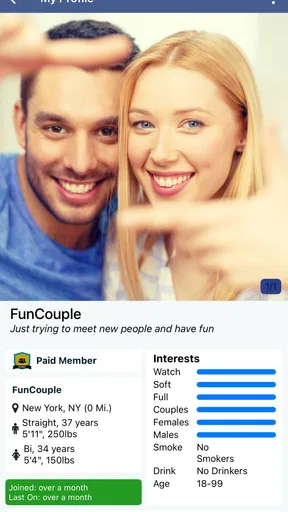
My advice for the first setup is to write for one specific person rather than trying to appeal to everyone. A vague profile saying that you are open to meeting people gives a visitor very little to respond to. A short description of the kind of lifestyle friendship you want, the topics you enjoy discussing, and the tone you prefer makes it easier for a compatible person to start a natural conversation.
I would also avoid putting sensitive information into the profile. Use enough detail to show personality without publishing a workplace, home address, daily routine, or other information that could identify you too easily. This is especially important in a mature social environment, where people may interpret openness in different ways. Being welcoming does not require being completely exposed.
A useful setup habit is to decide what “success” means before browsing. If your goal is online conversation, you can judge profiles by how comfortable and genuine the exchange feels. If you are hoping to make local friends, you will need patience and a willingness to check whether people are actually nearby and active. If you are looking for a particular kind of social compatibility, it is better to state that calmly than to begin with assumptions about everyone you encounter.
I would spend a few minutes reading the interface carefully instead of tapping through setup screens as quickly as possible. Social apps often place important choices around visibility, contact, and discovery in the onboarding flow. Even without treating setup as complicated, it is worth noticing what information you are presenting and what kind of attention you are inviting. A deliberate profile usually produces better conversations than a rushed one.
Turning the first conversation into a meaningful result
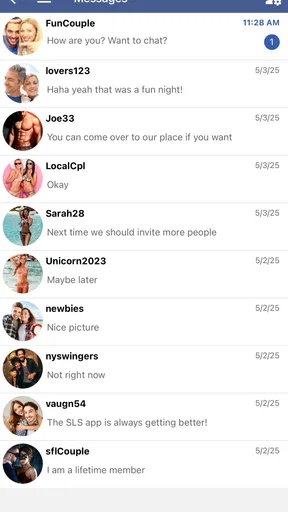
The first successful action is not simply sending a message. It is finding one person whose profile gives you a genuine reason to write, then opening with something specific. A message such as “Hi, how are you?” is easy to ignore because it gives the other person no direction. Instead, I would refer to one shared interest or ask a simple question connected to the way they describe themselves.
For example, if someone mentions that they want lifestyle friends for relaxed conversation, I might ask what kind of topics they enjoy discussing. If they describe themselves as interested in meeting people locally, I might ask what sort of social setting they prefer. The point is not to interrogate them; it is to make the first reply easy and comfortable. A good opening shows that I read the profile rather than sending the same message to everyone.
This is also where the app’s focused identity can work in its favor. On a broad network, I may need several messages before discovering whether we have anything in common. Here, the lifestyle focus gives me a natural starting point. The trade-off is that the subject may be more personal, so I need to be especially respectful of boundaries and avoid treating a shared category as proof of shared intentions.
A realistic everyday scenario would be using the app after moving to a new city. I might open it during a quiet evening, update my profile to explain that I am looking for conversation and low-pressure social connections, then browse slowly instead of contacting a large number of people. I could send one thoughtful message to someone whose interests match mine, continue only if the replies feel mutual, and suggest a public group setting before considering anything more personal. That workflow is slower than mass swiping, but it gives me a better chance of finding a connection that feels genuine.
One non-obvious advantage of this approach is that it gives me a way to test compatibility early. I can pay attention to whether the other person asks questions, respects a boundary, and responds to the actual subject of the conversation. Those small signals are more useful than a polished profile alone. If the exchange becomes pushy, sexual before I am comfortable, or focused entirely on getting personal information, I would end it rather than trying to rescue the interaction.
Where new users may get confused
The first likely confusion is the difference between finding lifestyle friends and finding a conventional dating match. Those goals can overlap, but they are not identical. I would not assume that everyone on the platform wants the same kind of relationship, and I would make my own intentions clear without demanding that another person match them. If you want a standard dating app with clearly structured romantic matching, a mainstream dating service may be a better fit.
The second confusion concerns activity. An app can have thousands of installs and still feel quiet for a particular user. Your results may depend on location, timing, interests, and whether the people you discover are checking in regularly. I would give the platform a fair trial by improving my profile and trying a few carefully chosen conversations, but I would not interpret a lack of immediate replies as a personal failure.
The third issue is the presence of paid items. Since the app is free but offers purchases from $24.99 to $199.99 per item, I would look closely at any purchase screen and make sure I understand what I am paying for before confirming it. I would also ask myself whether the purchase solves a real problem, such as helping me find more relevant contacts, or merely encourages me to spend because the free experience feels slow. If the community is not active enough for me, paying more may not fix the underlying issue.
Another point worth keeping in mind is that a mature rating does not replace personal judgment. It tells me that the app is intended for a mature audience, not that every conversation will be mature, safe, or compatible. I would use the app’s social tools carefully, keep early communication inside the platform when possible, and stop responding when someone ignores a clear limit. If a conversation moves toward meeting in person, I would choose a public place, tell someone I trust, and arrange my own way home.
The mixed rating also makes me more attentive to friction. If the interface feels unclear, a feature behaves unexpectedly, or conversations are difficult to manage, I would avoid building my entire social routine around the app. A focused service can be worthwhile even when it is not perfect, but the benefit needs to be visible in actual interactions. The important test is whether it helps me reach people I could not easily meet elsewhere.
How it compares with familiar social alternatives
Compared with a general social network, this app has a narrower reason for existing. A broad network is better for keeping up with people I already know, following public content, and participating in large communities. Social Lifestyle makes more sense when my priority is discovering lifestyle friends rather than maintaining an established social graph. I would choose the broader option for news and family updates, and this app for more intentional introductions.
Compared with a conventional dating app, the emphasis here appears less rigidly centered on romantic matching. That can be useful if I want to meet people without forcing every interaction into a dating framework. The downside is that I may need to communicate my intentions more clearly because the same social space can contain people with different expectations. Someone seeking a tightly filtered dating experience may prefer an app built specifically around romantic compatibility.
Compared with a forum or chat community, the advantage is the possibility of more direct, person-to-person discovery. A forum is often better for asking a public question and learning from many replies, while this app is more suited to identifying individuals who may become ongoing friends. The trade-off is that one-to-one contact requires more care: I have fewer public signals about a person, and I need to make my own judgment about whether the interaction is worthwhile.
One practical strategy is to use the app as a supplement rather than a replacement. I might discover a conversation here, then decide whether the connection is strong enough to continue elsewhere later. I would not rush that transition. Keeping the early stage within the app gives me time to see whether the person is consistent, respectful, and genuinely interested in friendship rather than simply trying to move me off-platform quickly.
Who will get the most from it
I think the app is most suitable for a patient first-time user who has a clear idea of the kind of lifestyle friendship they want. It may appeal to someone who feels that ordinary social networks are too broad, or who wants to meet people around a shared lifestyle without presenting the interaction as a standard date. It can also help someone who has recently moved, changed their social routine, or wants to talk with people who understand a particular interest.
It is less suitable for someone who needs a large, constantly active community, instant replies, or highly structured matching. It is also not the right choice if you want a completely private, anonymous browsing experience, because meaningful social discovery usually requires sharing at least some personal context. Anyone uncomfortable with mature social conversations should choose a more general-audience service instead.
I would also skip it if my only plan is to collect contacts quickly. The app’s real value is likely to come from quality and compatibility, not from building the biggest possible list. Sending many identical messages may produce activity, but it does not create trust and can make the experience feel transactional. A smaller number of thoughtful conversations is a better measure of whether the platform suits me.
A sensible path after the first connection
Once I have one promising conversation, I would resist the temptation to overuse the app at once. Give the exchange room to develop, ask questions naturally, and notice whether interest is mutual. If the person responds thoughtfully and respects the pace, I can gradually discuss a shared activity or a public social setting. If the conversation remains one-sided, vague, or uncomfortable, I would move on without feeling obligated to explain extensively.
I would review my profile after the first few interactions. If people misunderstand what I am looking for, the wording may be too broad. If I receive attention that feels unrelated to my goal, I can make my boundaries clearer. This small adjustment is one of the most useful workflows in a social app: treat early conversations as feedback about how your profile is being read, not just as a search for approval.
It is also worth deciding in advance how much time and money you are willing to give the service. Because the app is free to start and includes high-priced individual purchases, I would use a simple rule: first prove that the community is useful to me, then consider whether any optional purchase offers enough value. If the basic experience does not produce relevant conversations, I would not assume that spending will automatically create better friendships.
For privacy, I would keep identifying details limited until trust has developed. I would avoid sending intimate images or financial information, be cautious about requests that feel urgent, and use blocking or reporting controls if an interaction becomes inappropriate. These are not reasons to avoid the app; they are practical habits that matter more in a mature social environment than in a casual content feed.
After trying it, my view is cautiously positive for the right audience. Social Lifestyle has a clear purpose, a free starting point, and a more focused social angle than ordinary networks. Its smaller community, mixed average rating of 2.5, and optional purchases mean I would approach it with realistic expectations rather than assuming it will instantly solve loneliness or create a ready-made friend group.
My recommendation is to try it slowly and judge it by the quality of your first real conversation. Set up a careful profile, contact people for a specific reason, keep your boundaries visible, and wait before paying for anything. If you want lifestyle-focused introductions and are willing to be patient, the app may open doors that a general network never would. If you need fast activity, predictable matching, or a strictly conventional social experience, another service will probably serve you better.
Pros
- Connects users with people who share similar interests and lifestyles.
- Offers a convenient way to discover local events
- groups
- and activities.
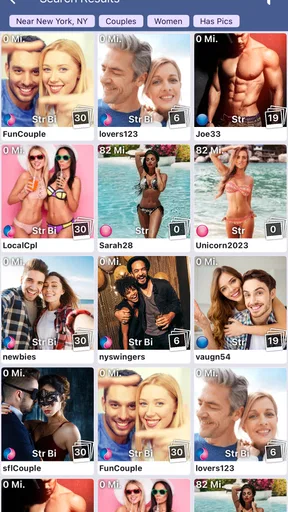
- Simple interface makes browsing profiles and content easy.
- Encourages community interaction through comments
- likes
- and discussions.
- Useful for finding inspiration
- recommendations
- and new social opportunities.
Cons
- Some features may require a premium subscription or in-app purchases.
- User activity and content quality can vary depending on your location.
- Privacy settings may need careful adjustment before using the app.
- Notifications can become frequent and distracting without customization.
- Interactions with unknown users may involve spam
- fake profiles
- or unwanted messages.
FAQs for Social Lifestyle
What is Social Lifestyle, and what can I use it for?
Social Lifestyle is designed to help users connect with people, discover social activities, share interests, and stay involved with their community through a mobile-friendly experience. Depending on the available features, you may be able to create a profile, browse posts or events, communicate with other users, and receive personalized suggestions. It is best suited to people looking for a convenient way to organize their social life and explore new connections.
Is Social Lifestyle free to download and use?
The application may be available to download at no initial cost, but some features could require in-app purchases, a subscription, or other forms of payment. Before registering or upgrading, check the pricing information shown in the Google Play Store or Apple App Store. Also review whether premium plans renew automatically, what benefits they include, and whether free users have limitations on messaging, visibility, events, or access to exclusive content.
What personal information does Social Lifestyle require?
Social Lifestyle may request information such as your name, email address, age, location, profile photo, interests, and account credentials. Certain permissions, including notifications, contacts, camera, or location access, may be optional depending on how you use the app. Before accepting, read the privacy policy and adjust permissions to your comfort level. Avoid publishing sensitive details publicly, especially when interacting with people you do not know.
Is Social Lifestyle safe for meeting or communicating with other users?
The app may include standard tools such as blocking, reporting, privacy settings, and profile controls, but users should still take responsibility for their own safety. Do not share passwords, financial information, home addresses, or private documents through the platform. If you arrange an in-person meeting with someone, choose a public location, tell a trusted person about your plans, and stop communication if anything feels suspicious or uncomfortable.
Does Social Lifestyle work on both Android and iPhone?
Availability depends on the current release and the country associated with your device account. Social Lifestyle may be offered through Google Play for Android and the App Store for iPhone, although features and updates can differ between platforms. Before downloading, check the required operating-system version, available storage, developer information, and recent user reviews. A stable internet connection may also be necessary for messaging and online content.


